
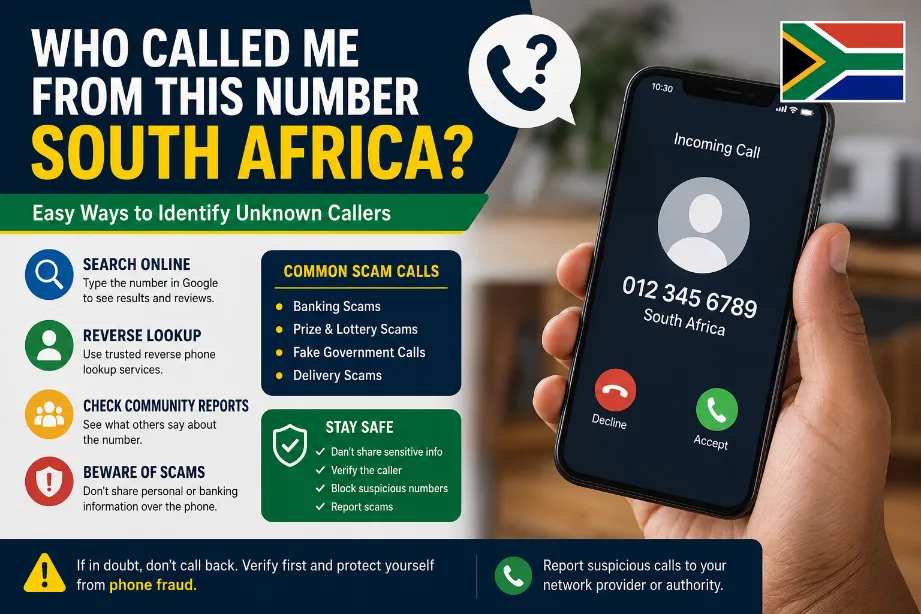
Who Called Me From this Number South Africa
Receiving a call from an unfamiliar number can be confusing, especially if the caller hangs up before you answer. Many people immediately wonder, Who Called Me From this Number South Africa? Whether it’s a missed call from a business, a telemarketer, or a potential scammer, knowing how to identify unknown numbers can help you decide whether to return the call.
This guide explains practical ways to identify unknown callers in South Africa, recognize common phone scams, and protect your personal information.
Why Do Unknown Numbers Call You?
Not every unknown call is suspicious. There are many legitimate reasons why someone might contact you from a number you don’t recognize.
Some common reasons include:
- Banks confirming account activity
- Delivery companies providing shipment updates
- Healthcare providers reminding you of appointments
- Job recruiters contacting applicants
- Businesses returning customer inquiries
- Friends or relatives using a different phone
However, unwanted calls are also common and may include:
- Telemarketing
- Robocalls
- Phishing scams
- Investment fraud
- Fake prize offers
Understanding the difference is important before responding.
How to Find Out Who Called You
If you receive a missed call, there are several safe methods you can use before calling back.
1. Search the Number Online
One of the simplest approaches is entering the full phone number into a search engine.
You may find:
- Business listings
- Company websites
- Public directories
- Community reports
- Forum discussions
If many people report the same number, it may already be known for marketing or scam activity.
2. Use Reverse Phone Lookup Services
Reverse phone lookup tools collect publicly available information and user reports.
These services may provide:
| Information Available | Description |
|---|---|
| Caller Type | Business or individual (when publicly listed) |
| Location | General area or province |
| User Reviews | Reports from previous recipients |
| Spam Score | Whether users have flagged the number |
Keep in mind that not every mobile number will appear in public databases.
3. Check Community Reports
Many websites allow users to report suspicious numbers.
These community reports often mention:
- Scam attempts
- Sales calls
- Robocalls
- Debt collection
- Fraud warnings
If numerous people report similar experiences, it’s wise to avoid returning the call immediately.
Common Scam Calls in South Africa
Phone scams continue to evolve, making awareness one of the best forms of protection.
Banking Scams
Fraudsters pretend to represent banks and ask for:
- PINs
- One-Time Passwords (OTPs)
- Internet banking credentials
- Card information
Legitimate financial institutions generally do not request sensitive security information over the phone.
Prize and Lottery Scams
Scammers may claim you’ve won:
- Cash prizes
- Vehicles
- International lotteries
They often request an upfront “processing fee” before releasing the prize.
Real prize promotions do not require advance payments.
Fake Government Calls
Some callers impersonate government departments or law enforcement agencies.
They may threaten:
- Arrest
- Account suspension
- Tax penalties
Their goal is to pressure victims into making immediate payments.
Delivery Scams
Fraudsters sometimes pretend to be courier companies asking for:
- Verification codes
- Personal details
- Banking information
Always verify unexpected delivery calls using official contact channels.
Warning Signs of a Scam Call
Be cautious if a caller:
- Demands immediate payment
- Requests banking passwords
- Asks for OTP verification codes
- Pressures you to act quickly
- Refuses to provide identification
- Becomes aggressive when questioned
These are common warning signs of fraudulent activity.
What Should You Do Before Calling Back?
Before returning an unknown call:
- Search the number online.
- Look for public reviews.
- Verify whether it belongs to a legitimate company.
- Avoid sharing personal information.
- If uncertain, contact the organization directly using its official phone number.
Taking a few minutes to verify the caller can help prevent fraud.
How to Block Unwanted Numbers
Modern smartphones make blocking unwanted callers simple.
Android
- Open the Phone app.
- Select the recent call.
- Tap Block or Report Spam.
iPhone
- Open the Phone app.
- Tap the information icon next to the number.
- Choose Block this Caller.
Blocking repeated nuisance callers helps reduce interruptions.
How to Protect Yourself from Phone Fraud
Following basic security practices significantly lowers your risk.
Never Share Sensitive Information
Avoid revealing:
- Banking PINs
- Passwords
- Verification codes
- Identity numbers
- Credit card security codes
Verify the Caller
If someone claims to represent:
- Your bank
- A government office
- An insurance company
- A courier service
Hang up and contact the organization using its official published number.
Keep Your Phone Updated
Software updates often include:
- Improved spam detection
- Better security
- Enhanced call filtering
Installing updates helps protect your device.
Can Every Number Be Identified?
No.
Several factors affect whether a caller can be identified:
- Private numbers hide caller information.
- Newly issued mobile numbers may not appear in public directories.
- Some businesses use rotating outbound numbers.
- Caller ID spoofing allows scammers to disguise their real number.
Because of these limitations, reverse lookup services cannot identify every call.
Wondering Who Called Me From this Number South Africa is common, especially as spam and scam calls become more frequent. Fortunately, there are several reliable ways to investigate unknown numbers, including reverse lookup tools, online searches, and community reports. By verifying callers, avoiding the disclosure of sensitive information, and recognizing common scam tactics, you can make informed decisions and better protect yourself from phone fraud.
Is it safe to call an unknown number back?
Not always. Search the number first and verify its legitimacy before returning the call.
Can I identify private or hidden numbers?
Generally, no. Numbers marked as “Private,” “Unknown,” or “Hidden” intentionally conceal caller information.
Are reverse phone lookup services always accurate?
No. They rely on publicly available data and user submissions, so information may be incomplete or outdated.
What should I do if I shared personal information?
If you believe you’ve disclosed sensitive information to a scammer:
- Contact your bank immediately.
- Change affected passwords.
- Monitor your accounts for suspicious activity.
- Report the incident to the appropriate authorities.